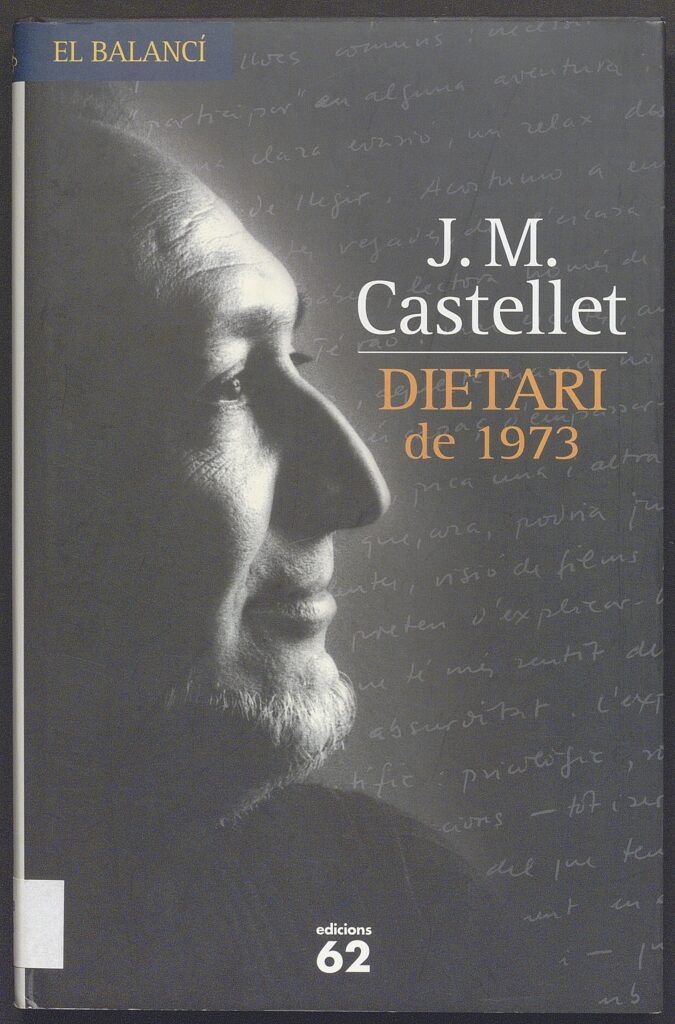
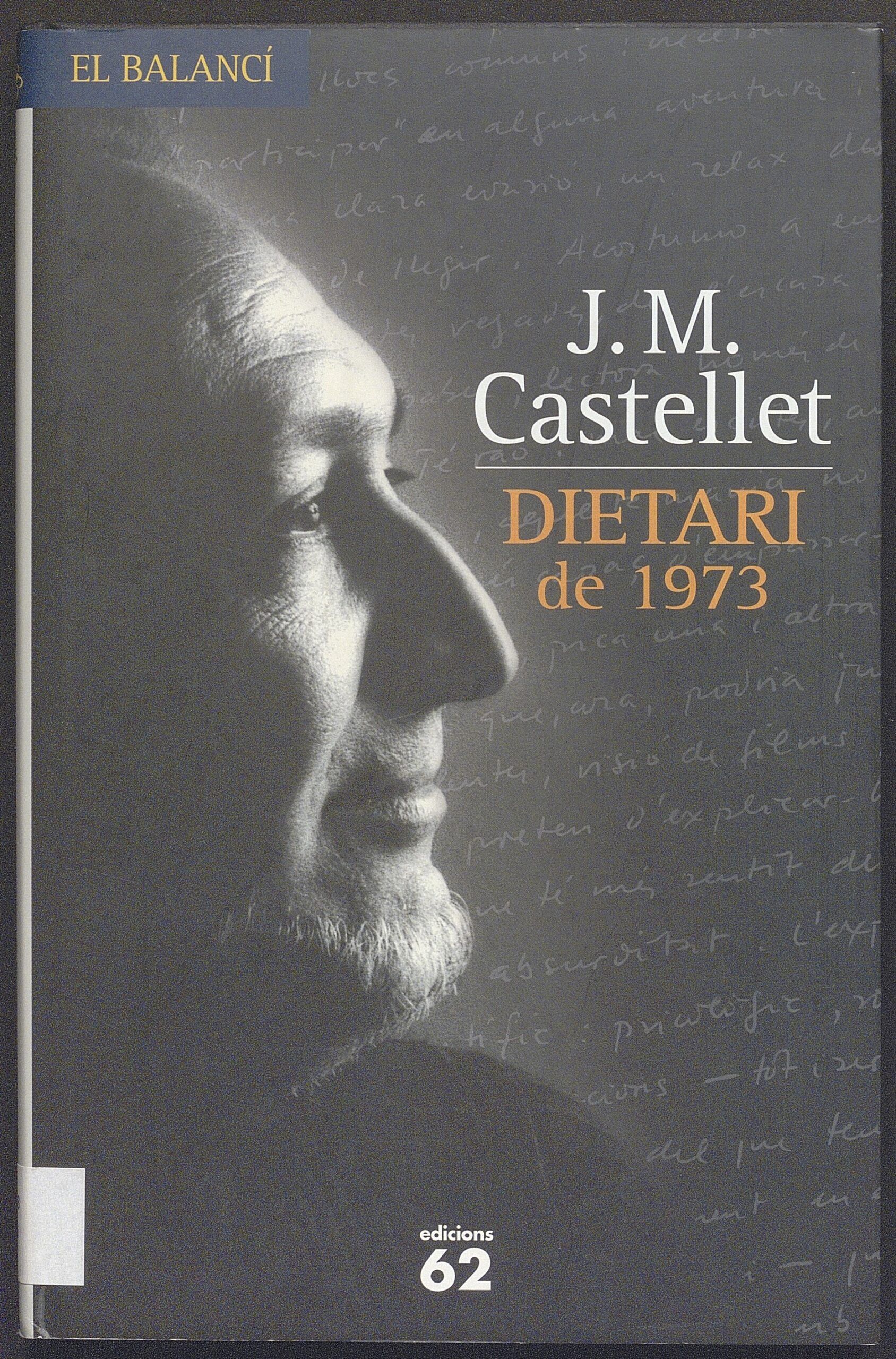
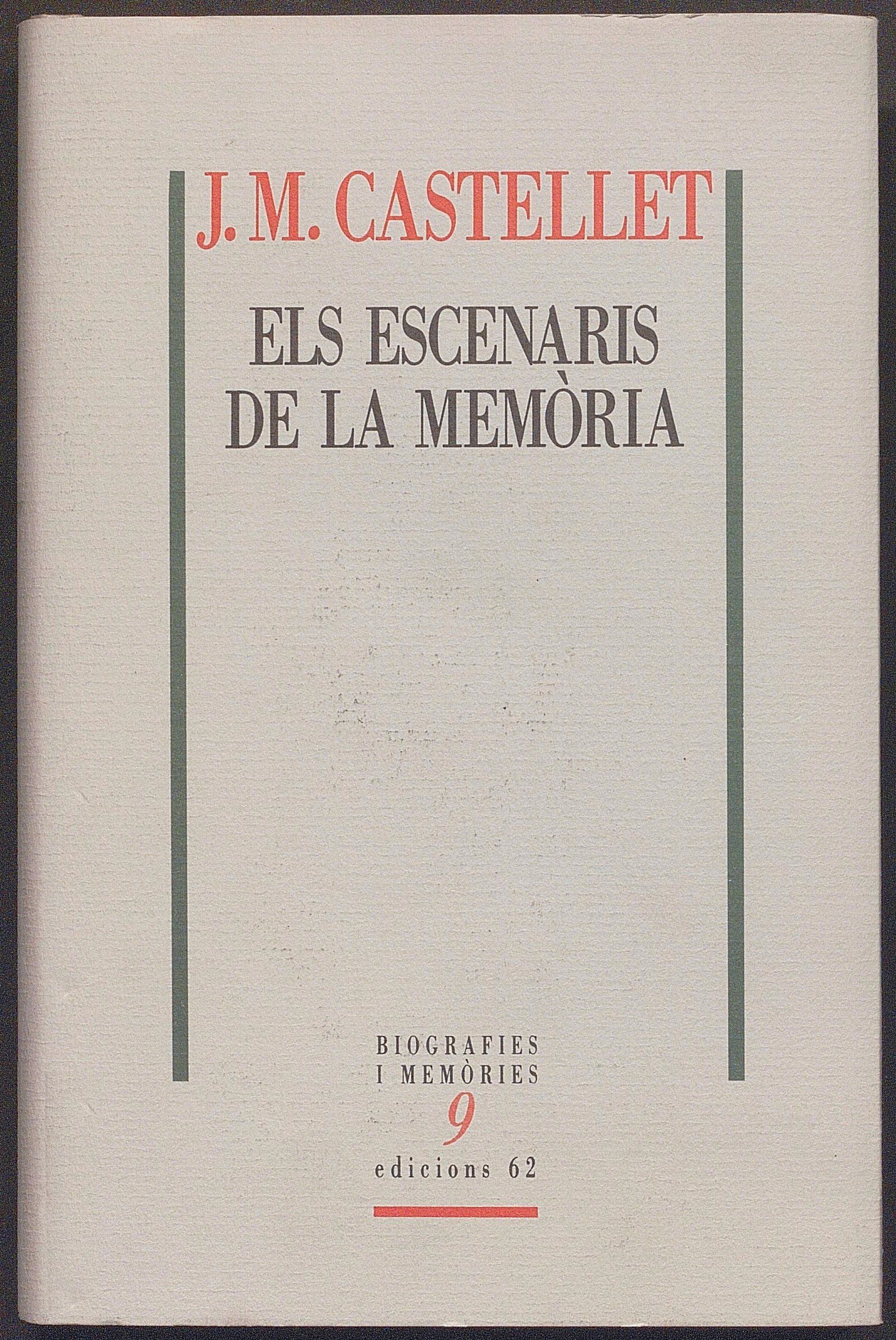
The process of writing Josep Pla o la raó narrativa, which began in 1973 and concluded in 1978 with the study’s publication, marked the start of a new phase in Josep M. Castellet’s literary output: the literature of memory, or literature of the self. Initially, he attempted an intimate diary, but the result failed to interest him; it remained merely a stylistic exercise that ended up locked in a drawer, only to be published more than thirty years later under the title Dietari de 1973.
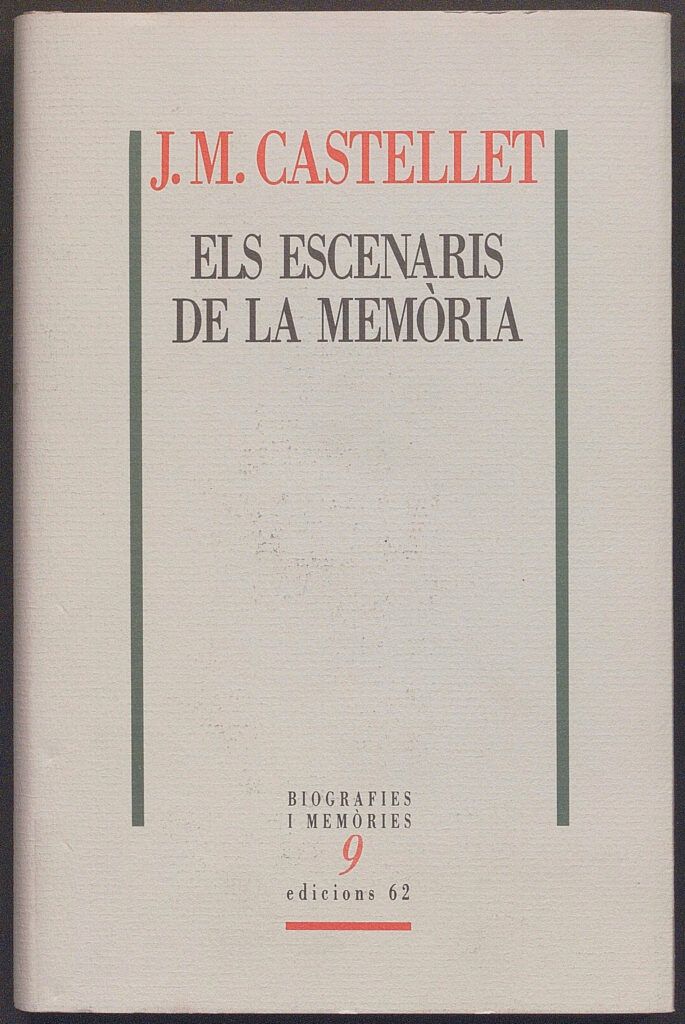
This quest for a literature of the self remained very much alive; ten years later, during a tribute organized by the Associació d’Escriptors en Llengua Catalana in December 1983, Castellet read in the Great Hall of the University of Barcelona a portrait of Giuseppe Ungaretti that would go on to become, without any modification, the first chapter of Els escenaris de la memòria. He had found the key: the literary portrait.
The formula of Els escenaris de la memòria centres on constructing literary portraits—partial and always set in a scene shared with the narrator—of a series of figures (all of them writers), who end up leaving behind the pieces that form what might be described as an oblique self-portrait. The narrator, a first-person “I” who does not hide his name, Josep M. Castellet, is always defined and explained through, or in relation to, others. Whether receding into the background or actively intervening in the scene, the narrator asks questions and plans the conversations he holds with the others; conversations that, always in his own interest, lead him to learn, to understand, and to discover in others what he himself wishes to express. In other words, he makes them speak, observes them and transcribes them, as well as himself, to the point that the characters serve as a model, as a mirror.
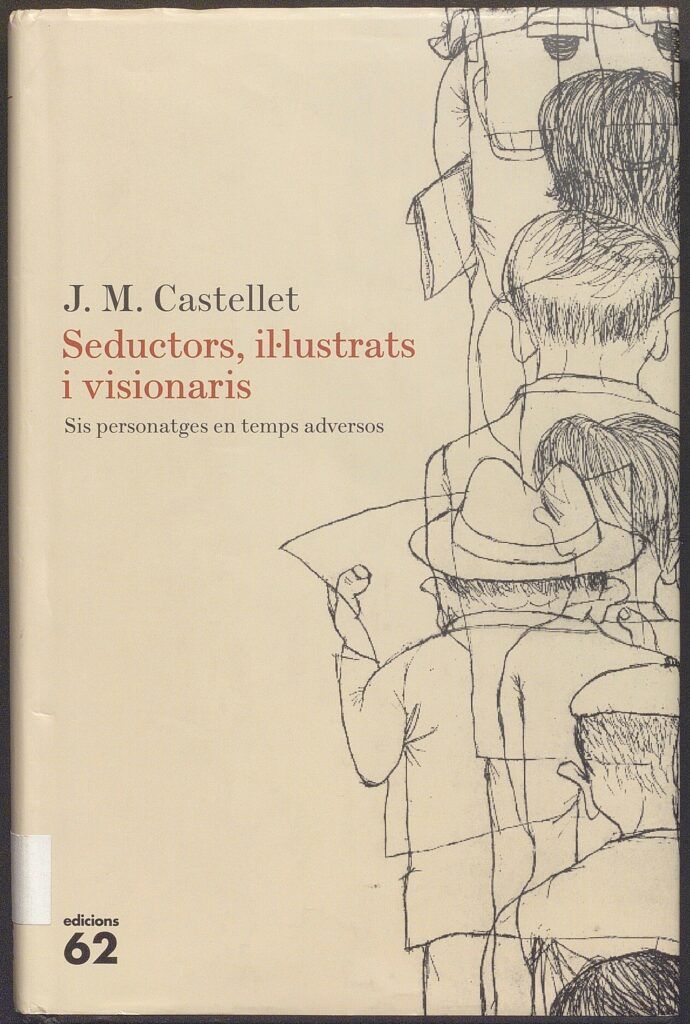
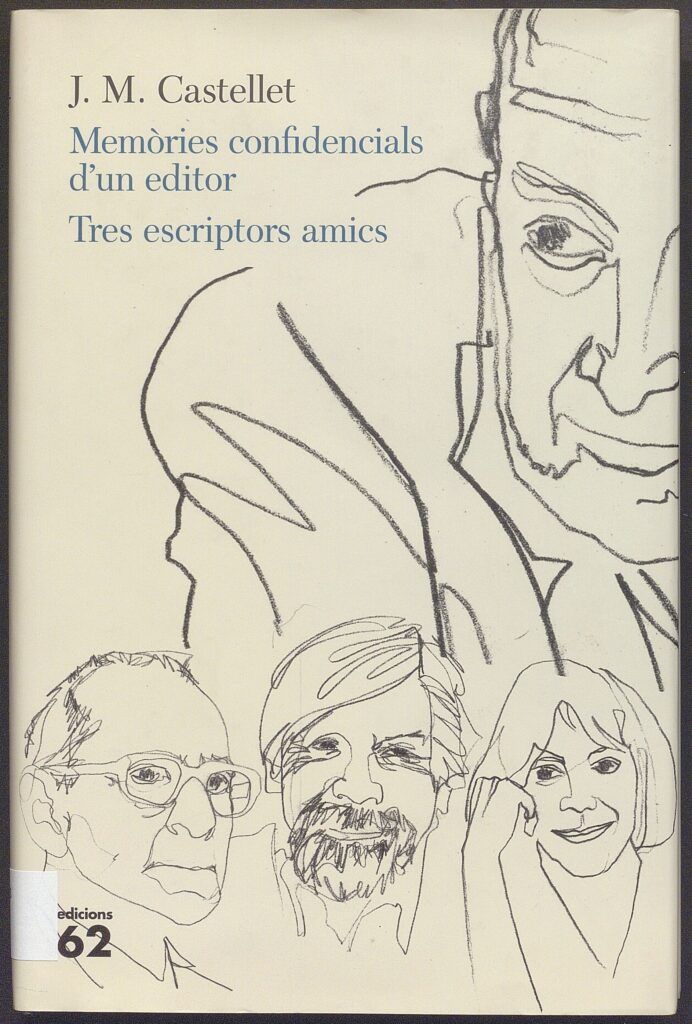
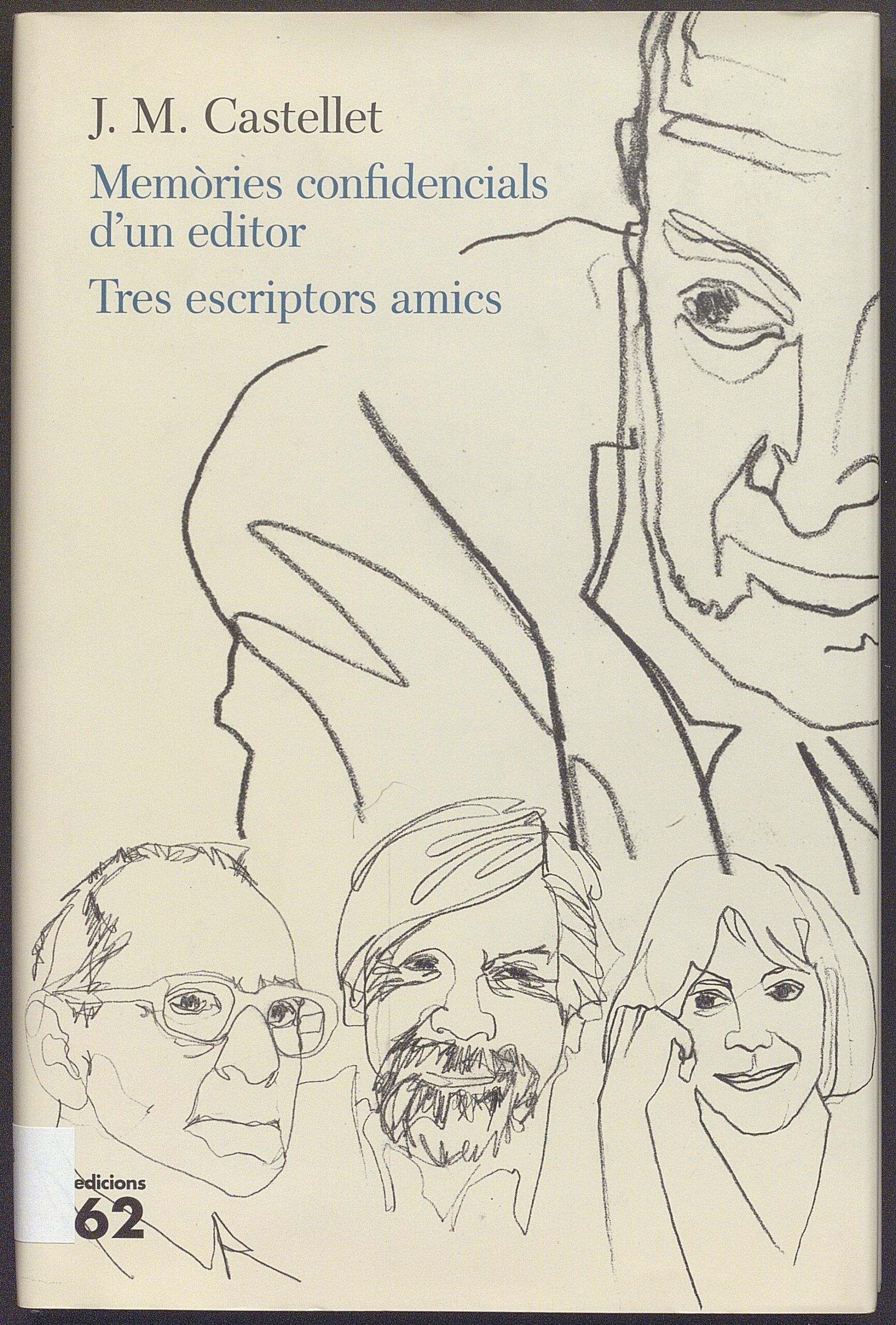
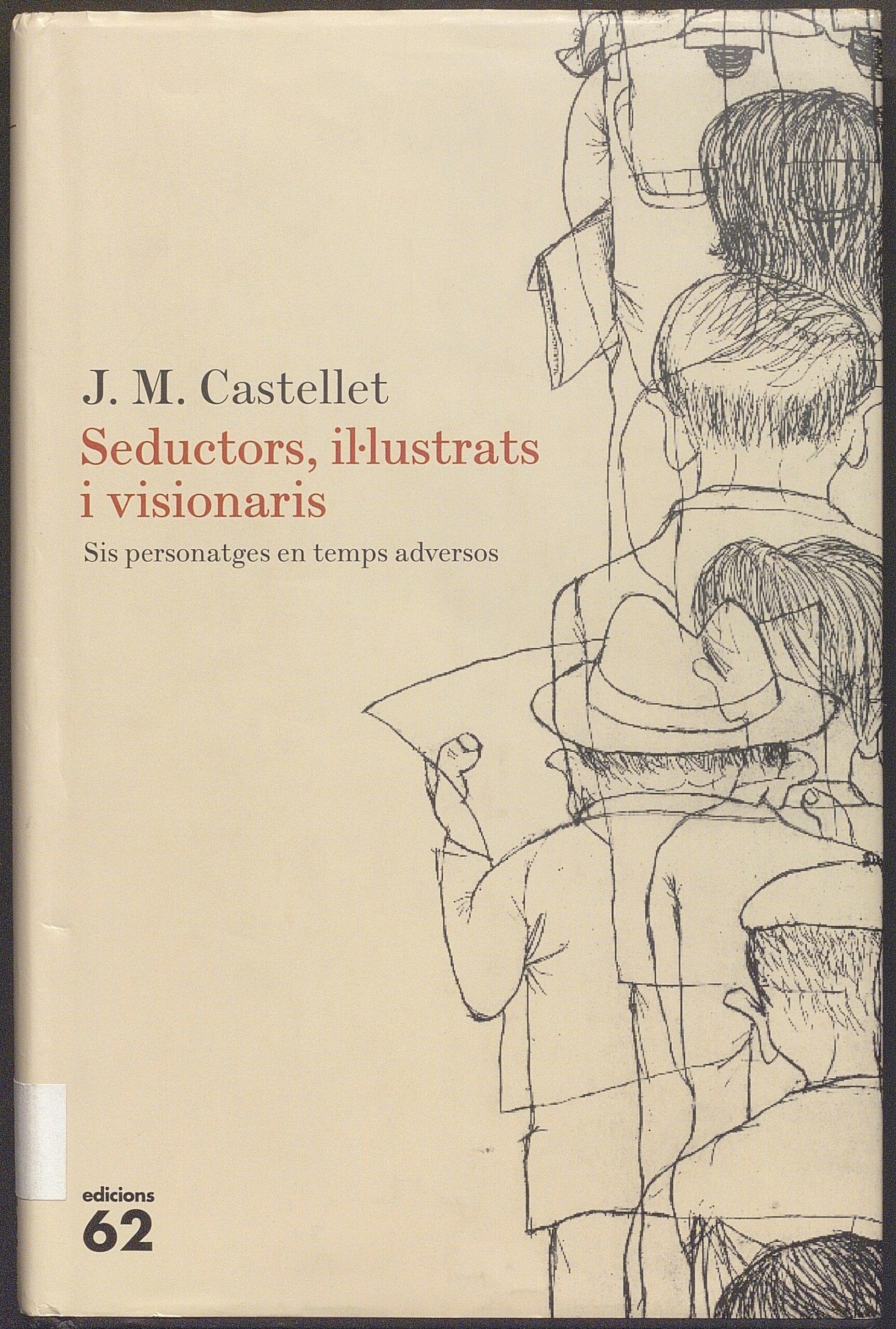
The protagonists of the Escenaris –Giuseppe Ungaretti, Mercè Rodoreda, Rafael Alberti, Josep Pla, Pier Paolo Pasolini, Octavio Paz, José Luis Aranguren, Mary McCarthy and Pere Gimferrer– belonged, with the exception of Gimferrer, to the sphere of the masters who had shaped him, who were by no means his closest writer friends. In the prologue to the Escenaris he had already hinted at a possible second volume featuring more intimate figures: “Who knows if, one day, certain friendlier figures might appear and knock at the door of my memory, asserting their justified right to complete the personal imagery I have projected onto the past, a blend of sensations and experiences, friends and acquaintances, anecdotes and lived moments, frustrations and those few instances of serene fulfilment I have managed to attain.” Little by little, these friends came knocking at the door. And gradually, and not without struggle, Castellet wrote a series of portraits that were published in Seductors, il·lustrats i visionaris (2009), featuring Manuel Sacristán, Carlos Barral, Gabriel Ferrater, Joan Fuster, Alfons Comín and Terenci Moix, and Tres escriptors amics (2012), featuring Salvador Espriu, Baltasar Porcel and Montserrat Roig.
At the time of his death in January 2014, Castellet was working on a new volume of literary portraits: those of his protégés from the Seminario Boscán.